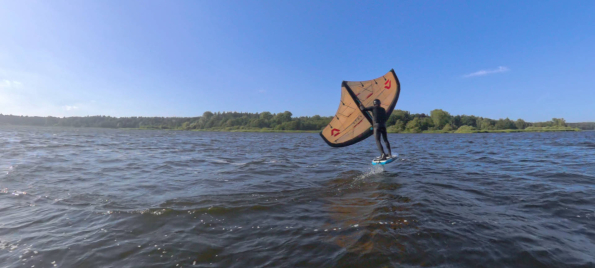
Backwind Jibe
The movement sequence in brief
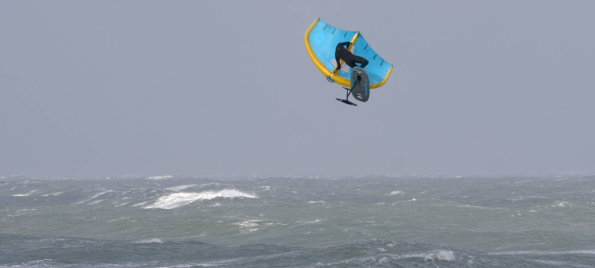
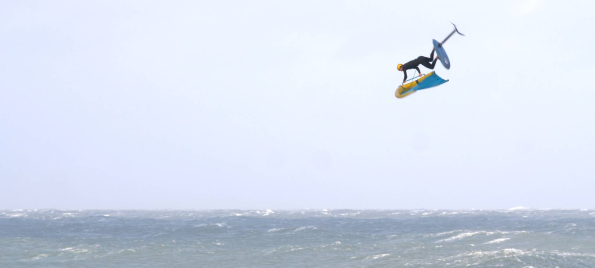
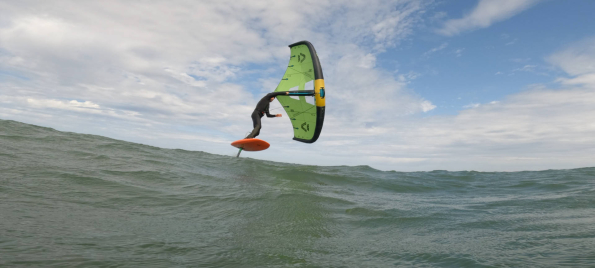
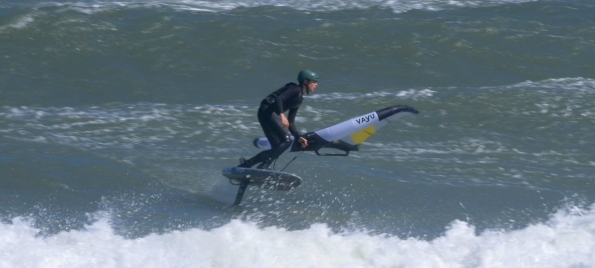
In a backwind jibe, the wing is lifted to windward during a switch (toeside) foil run, and then a jibe is performed.
The movement sequence in brief:
- Foiling in switch stance (toeside)
- Slightly bear away to a deeper course; this reduces the wind power in the wing
- The back hand reaches forward (underhand grip), and the front hand lets go
- Lift the wing over your head toward the windward side, and use your other hand to grip the back of the boom
- Because you're riding away from the wind, the power of the wind on the backwinded wing is low
- During the turn, the trailing edge of the wing swings through the wind, the airflow over the wing is now coming from the correct side again
- Just finish the jibe while foiling; the wing is already positioned correctly in your hand (no need to switch grips).
Tip: In light winds, you can practice handling the wing while standing on a grassy field or beach. This dry-land training will help you coordinate your movements on the water later on.
September 10, 2026 © WING DAILY | text: Jürgen Schall | photos/graphics: Jürgen Schall | translation: DE