Indiana Foil Review
Marlin S, Marlin XS and Dolphin S
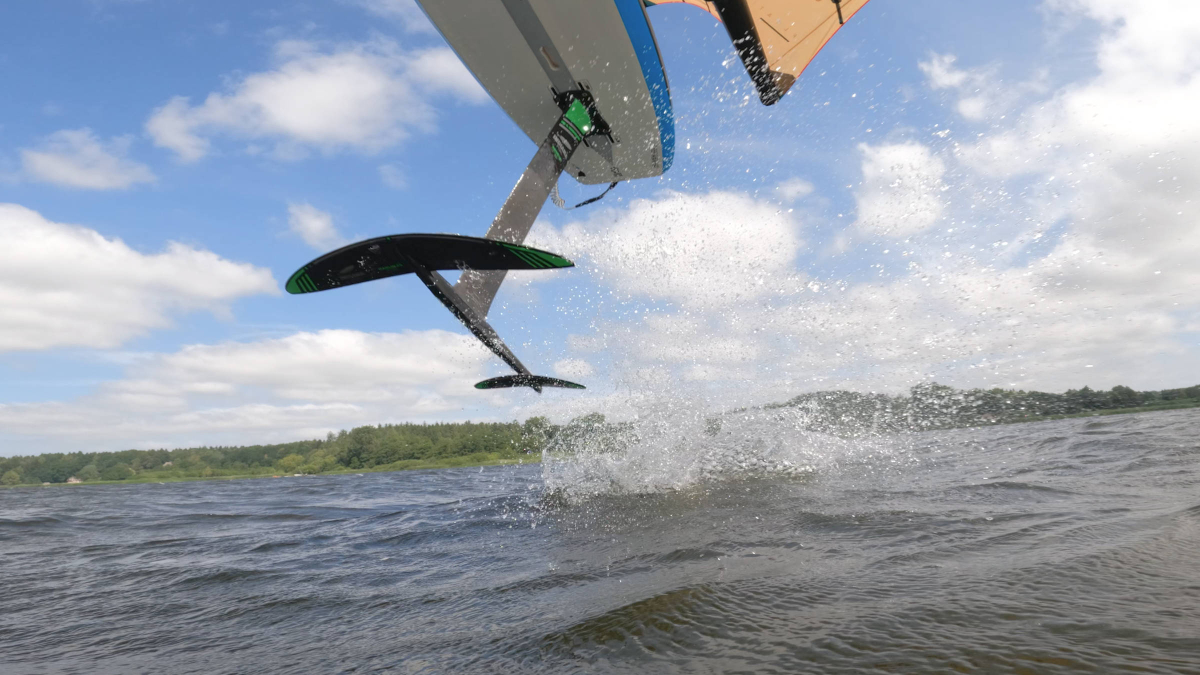
During the spring and summer, I also mounted three test foils from Indiana under the tail of my boards for many of my sessions. Three foils with surface areas of 840 cm2, 720 cm2, and 690 cm2, paired with an 85-centimeter mast, which cover my entire range of wingfoiling conditions.
I rode them with a body weight of 70 kg (important for evaluation) on 72- and 50-liter boards at spots ranging from flat water to North Sea and Atlantic swells.
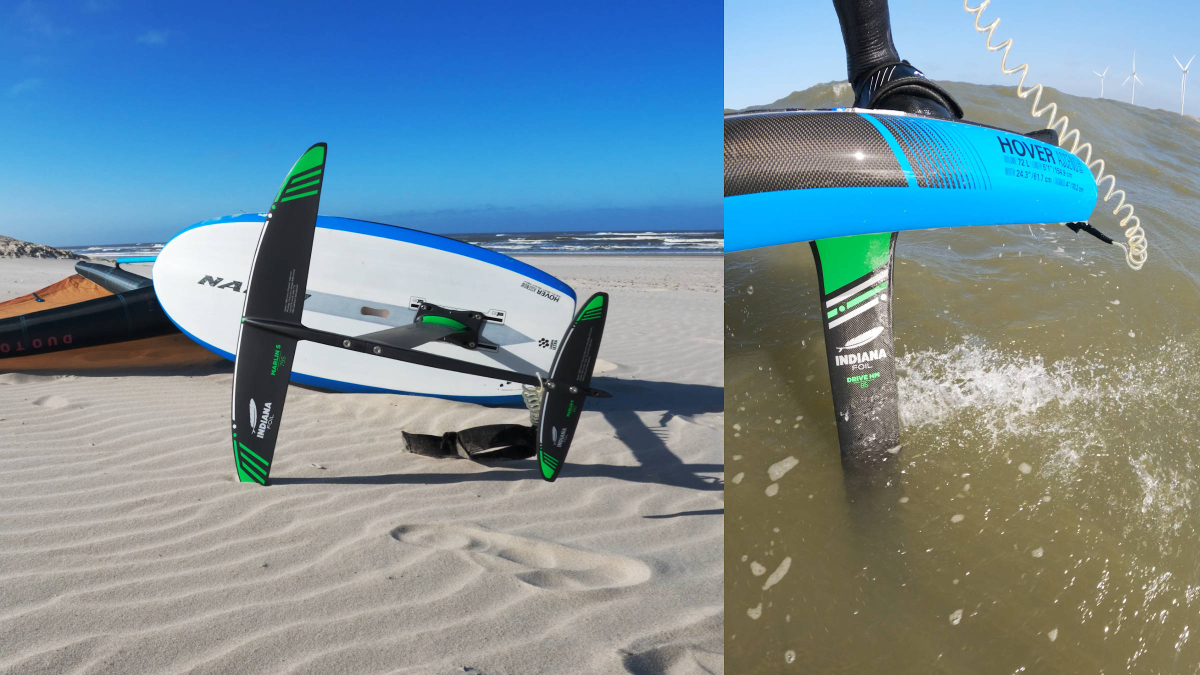
Here you’ll find the ride report for the Marlin S, Marlin XS and Dolphin S, which were used with the Drive HM 85 mast.
Marlin S with Flatmount M/S Tail and Marlin S Stabilizer:
With a surface area of 840 cm2 (79.5 cm wingspan), this front wing is a large foil for my weight class. I’ve used it with 5- to 4-square-meter wings on flat water and in 1- to 2-meter waves (stabilizer: 190 cm2, 36 cm wingspan).
In gusty winds on lakes, it gets me foiling early and allows me to execute glide moves at high speed. The foil delivers good pop for jumps, gets back up quickly after landings, and stays foiling even at slower speeds. It rides very well overall - a great foil for use on inland lakes and small waves on the ocean.
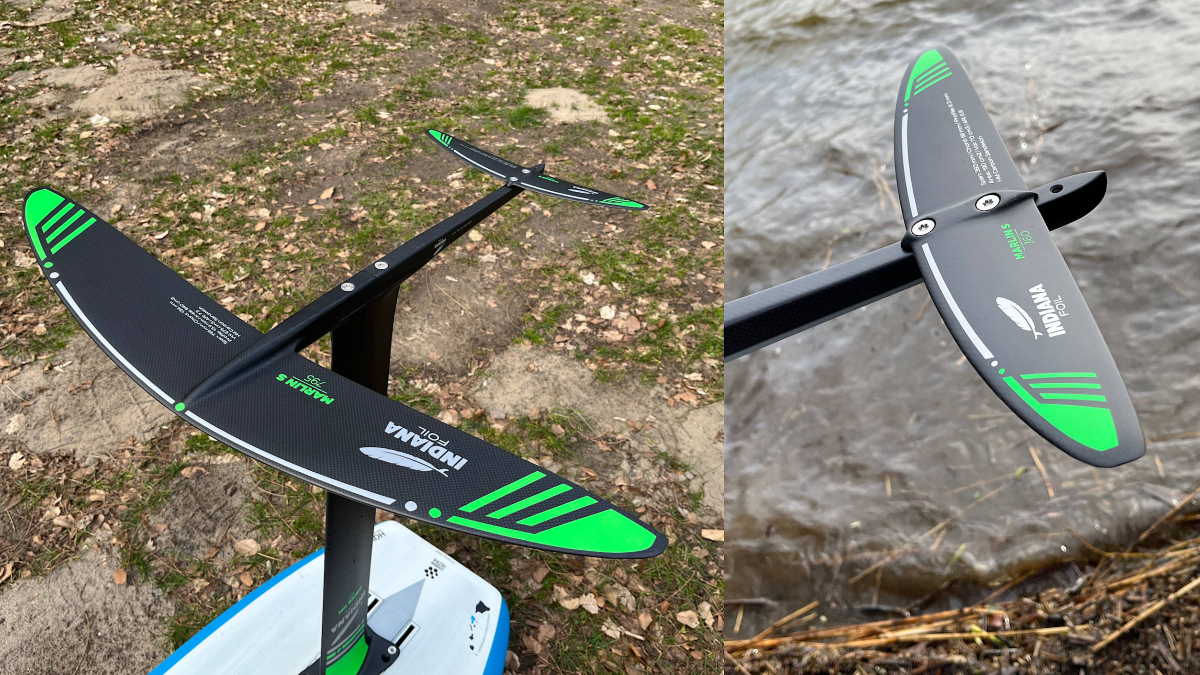
Marlin XS with Flatmount XS/XXS Tail and Marlin XS Stabilizer:
For tight frontside and backside turns on bigger waves, I need less surface area and wingspan, which is why I went with the 690 version of the foil (72 cm wingspan) with a 170 cm2 stabilizer (33 cm wingspan). And I was blown away by it.
Fast and agile in both tight and wide turns, with good pop for jumps, quick to recover after landings, and a good stall speed for its size. It’s also pretty loose on the roll axis. I ran the stabilizer in the frontmost position and immediately felt completely at home.
During a light-wind session on the lake with a 5.0 wing, however, you notice that small foils don’t provide much glide; with 3.0 and 4.0 wings in the waves, the foil was top-notch—that’s where it belongs (or when riding flat water with stronger winds).
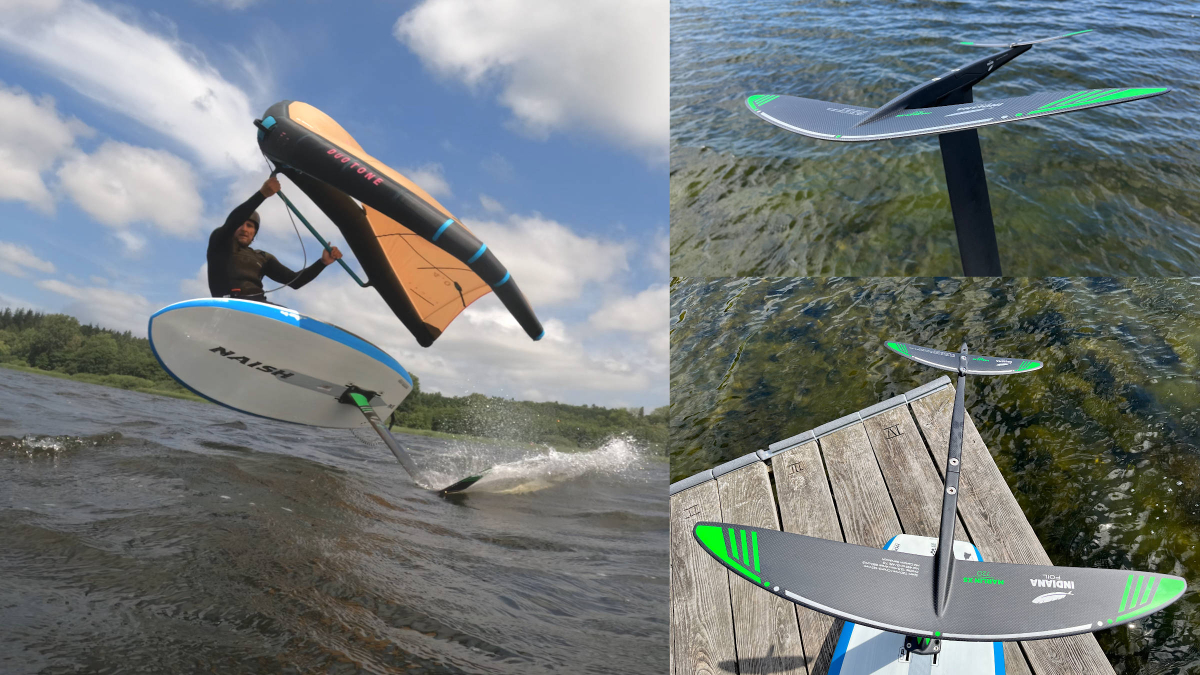
Dolphin S with Monobloc Dolphin S Tail XS:
If you’re looking for a small foil that delivers great glide and carving performance, you should check out the Dolphin S. With a wing area of 720 cm2 and a wingspan of 82.7 cm (stabilizer: 135 cm2, 34 cm wingspan), this foil is fast, has excellent glide, and is quite agile.
The front wing cuts cleanly through the water even when breaking into a sharp upwind turn and breaching, doesn’t lift upward, and stays cleanly on the foil during the subsequent downwind turn. No cross-cutting, no wobble - a Swiss precision instrument.
After testing the Dolphin S on the Danish North Sea, I took it - as my only foil - n a two-week road trip to Brittany, and it performed well in all conditions there, too. The medium-aspect foil delivers less pop than the Marlins, but jumping is still possible. After landings, I get back on the foil faster with this one than with other foils I’ve tested that have a similar aspect ratio.
For me, it’s a one-size-fits-all foil that I can ride with 5.0 to 3.0 wings in all conditions, even in gusty light winds. Perfect for agile riding on swell. Only in more powerful waves do I need something a bit smaller (like the Marlin XS, for example).
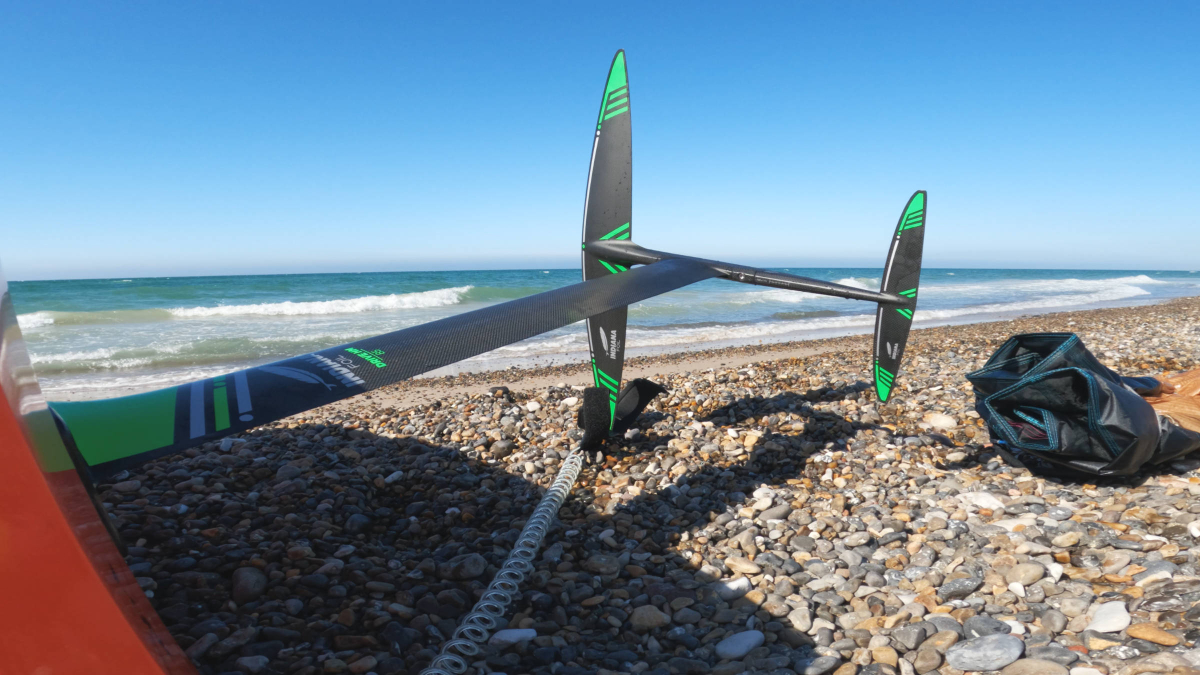
Conclusion:
All three Indiana foils are very good; the last two are even perfect foils for skilled riders in my weight class. Speaking of weight - Indiana’s carbon foils are lightweight. The 85 Drive HM mast weighs 1,790 g with the two fuselage screws; the complete planes (front wing + fuselage + stabilizer) weigh 1,110 g (Marlin XS), 1,130 g (Dolphin S), and 1,350 g (Marlin S). This means the weight of the three complete foils ranges from just under to just over 3 kilograms.
August 24, 2026 © WING DAILY | text: Jürgen Schall | photos/graphics: Jürgen Schall, Oliver Flöter | translation: DE