Which leash to use for wing foiling?
Review: short coiled ankle leash from i99
When it comes to board leashes for wing foiling, you have a choice of different options. Classic surf leashes are less suitable, since you drag them behind you along their entire length. And nothing is more annoying than a leash dangling wildly in the water behind your board while you’re foiling.
In addition to roll leashes worn on a hip belt (which are more of a niche product due to their hard plastic case and retraction mechanism), coiled leashes are the most common solution - short while foiling, long after a fall.
Board leashes can be divided into three categories: ankle leashes (attached above the ankle), knee leashes (worn on the lower leg below the knee), or hip leashes (attached to the hip belt).
Hip Leash
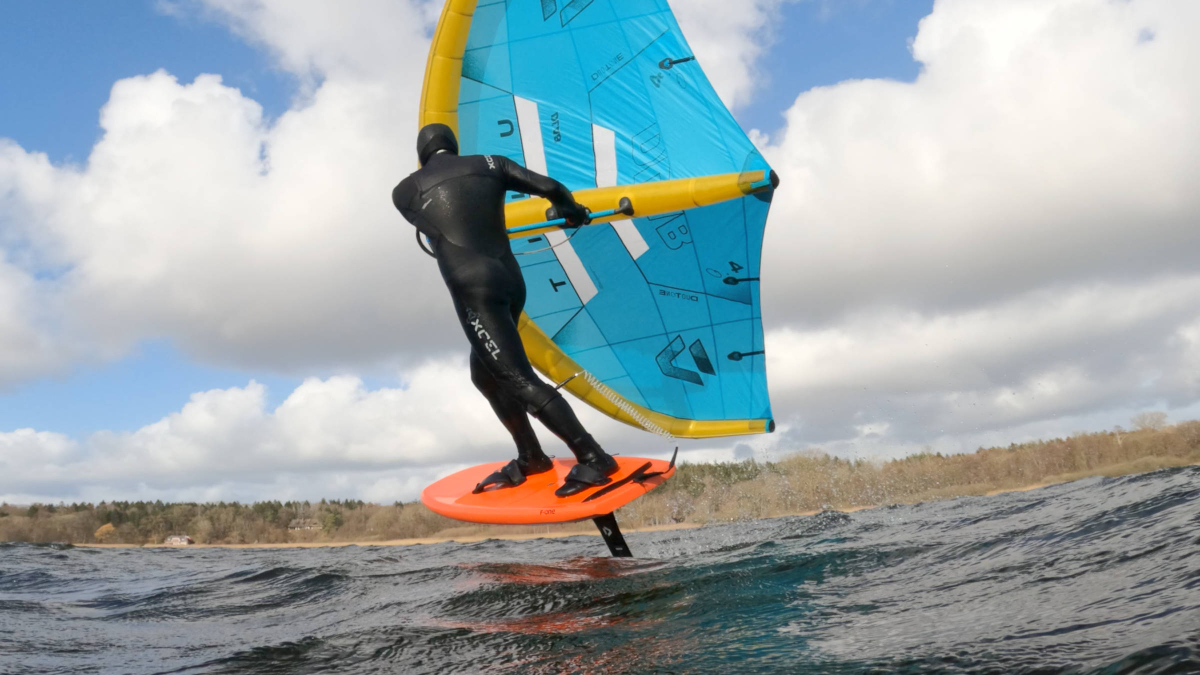
If you’re foiling with a hip belt because your wing leash is already attached to it, you can also clip your board leash into the back of the belt (either directly with the velcro loop or using a carabiner). The advantage: the leash almost never gets in the way when you change your foot position on the board. The downside: visually, you look like you’re on a leash.
Knee Leash
The second option is a knee leash. The velcro loop is slightly larger than on ankle leashes so that it fits around the lower leg below the knee. A knee leash is ideal if you change your foot position while foiling depending on the direction of travel. As with the ankle leash, the loop is attached to the leg that’s normally in the back. This keeps the distance to the leash attachment at the tail short.
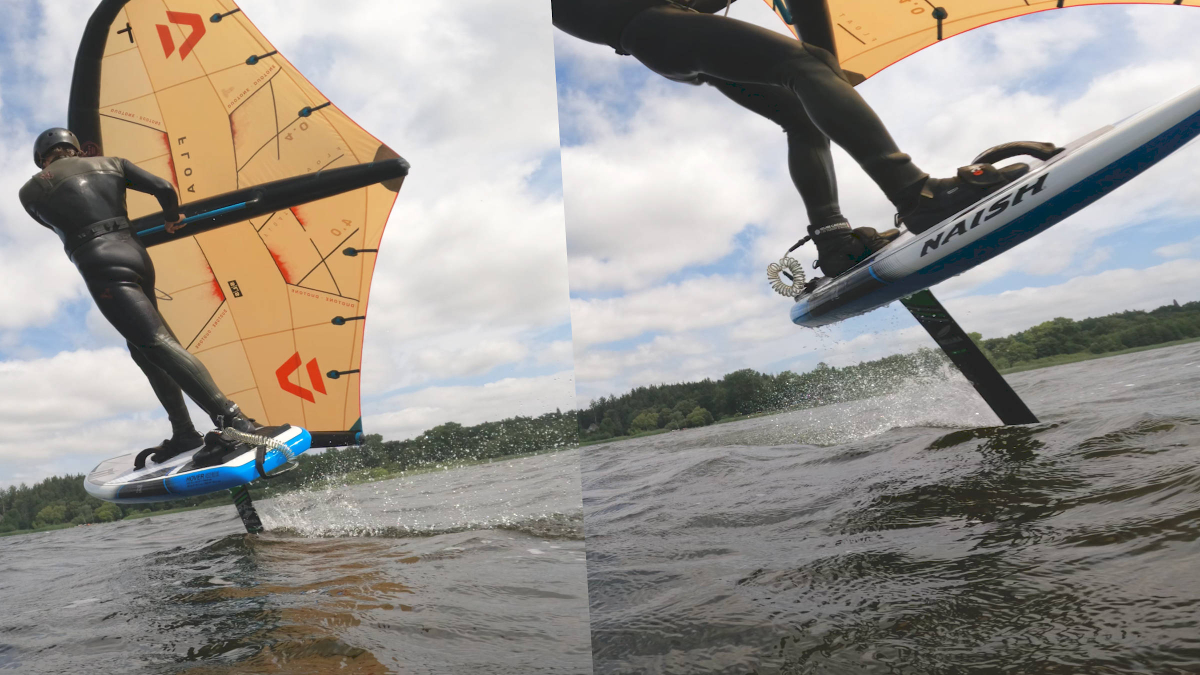
When changing foot positions, the leash doesn’t rest on the board but runs diagonally from the front leg to the tail, so the back foot can hardly get tangled in it. If appearance is important to you, you should choose a transparent leash, as it is less visible (e.g., in photos, see above) than, for example, black coiled leashes. Transparent knee leashes are available from Indiana, for example.
Ankle Leash
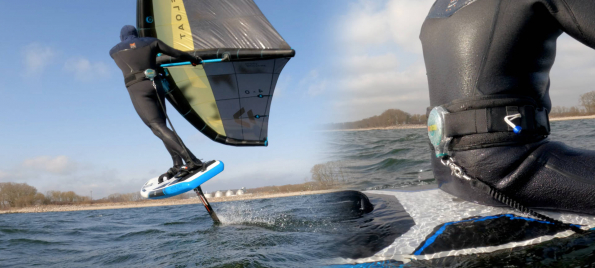
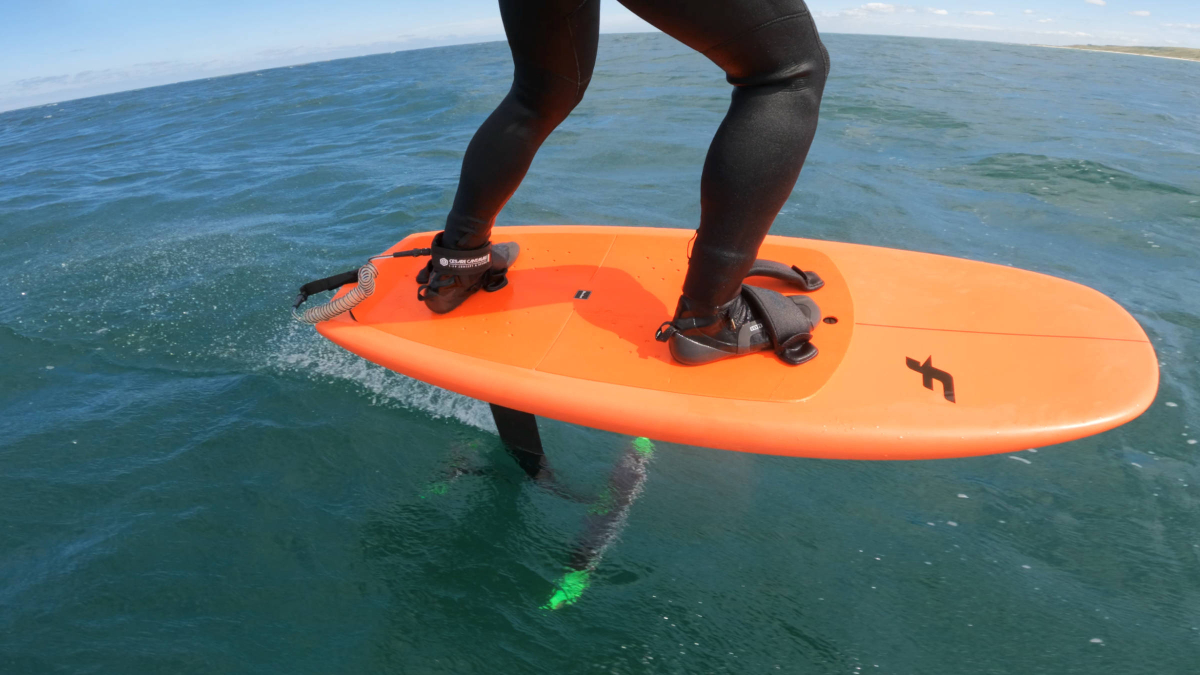
Leash option number three is the ankle leash. This is a good choice if you spend most of your time standing in the same position on the board (e.g., with a 2-strap setup). In this setup, the same foot is always in the back, and the leash is attached to the ankle of that foot. Thanks to the coiled design, the leash is always taut enough that it doesn’t drag in the water and is barely visible in photos. Only when you change your foot position (with the leash then attached to the front leg) does the leash stretch across the deck, potentially getting in the way between your foot and the strap or even slipping under your heel.
For a month, we tested a slightly shorter 8-foot coiled leash from i99, which worked perfectly as an ankle leash. A good solution if you mostly foil in one stance (as shown in the photo above in a goofy stance: left leg back, leash on the back foot).
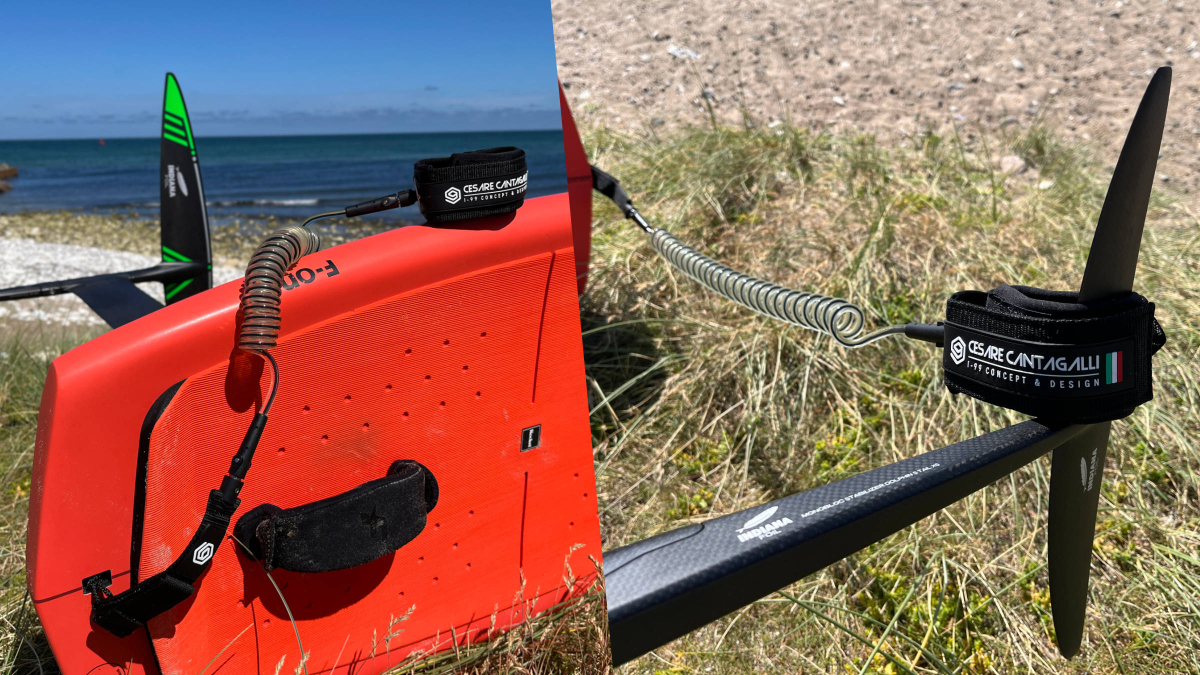
When getting on the board, leashes always seem to get in the way somehow (no matter which type you use). If the leash is twisted around your leg, you can step over it with one leg as you stand up, or - for ankle and knee leashes - rotate the velcro loop while sitting on your board.
Just try out the different options to find the solution that works best for you.
August 31, 2026 © WING DAILY | text: Jürgen Schall | photos/graphics: Jürgen Schall | translation: DE