Duck Jibe
The dynamic version of the duck jibe
In the dynamic version of the duck jibe, you use only one hand at times and let the wing fly downwind. You must pay attention to the correct balance between wind strength and downwind speed.
- In light winds, you can release the hand early and make the turn tighter so that the wing maintains its airflow.
- In strong winds, you need to reduce the wind power in the wing by foiling on a deep broad reach and using a wider jibe radius. The front hand should release from the boom a little later.
The basic sequence of movements:
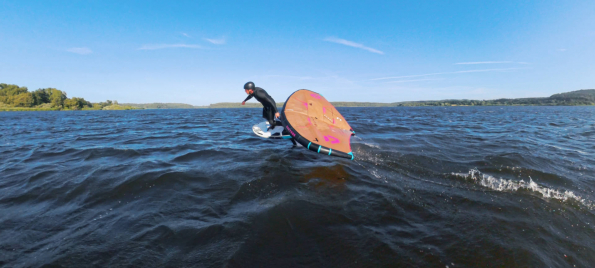
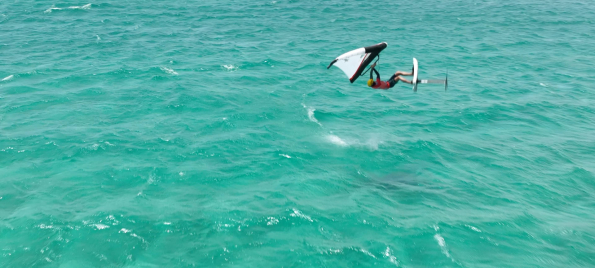
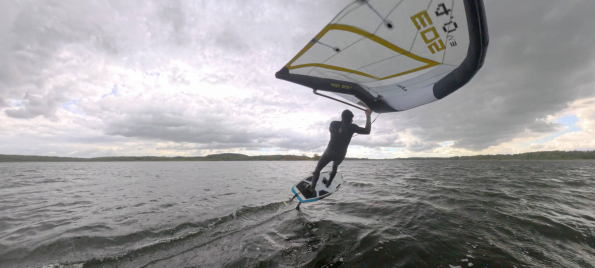
After initiating the duck jibe, the front hand lets go and moves behind the back hand on the boom. The wing initially flies upright downwind and then swings with its leading edge pointing downward. Therefore, the back hand lifts the wing so that the front tube does not touch the water.
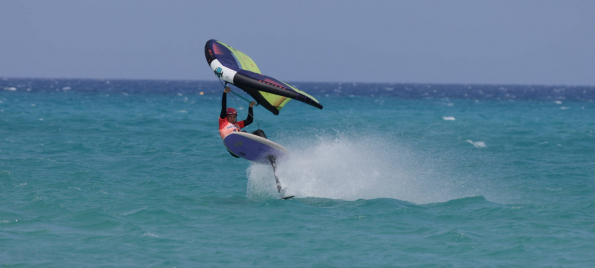
The front hand now reaches forward and lifts the wing back up so that it is once again – now already facing the new direction of travel – exposed to the wind. Finish the duck jibe, and off you go.
July 5, 2026 © WING DAILY | text: Jürgen Schall | photos/graphics: Jürgen Schall | translation: DE